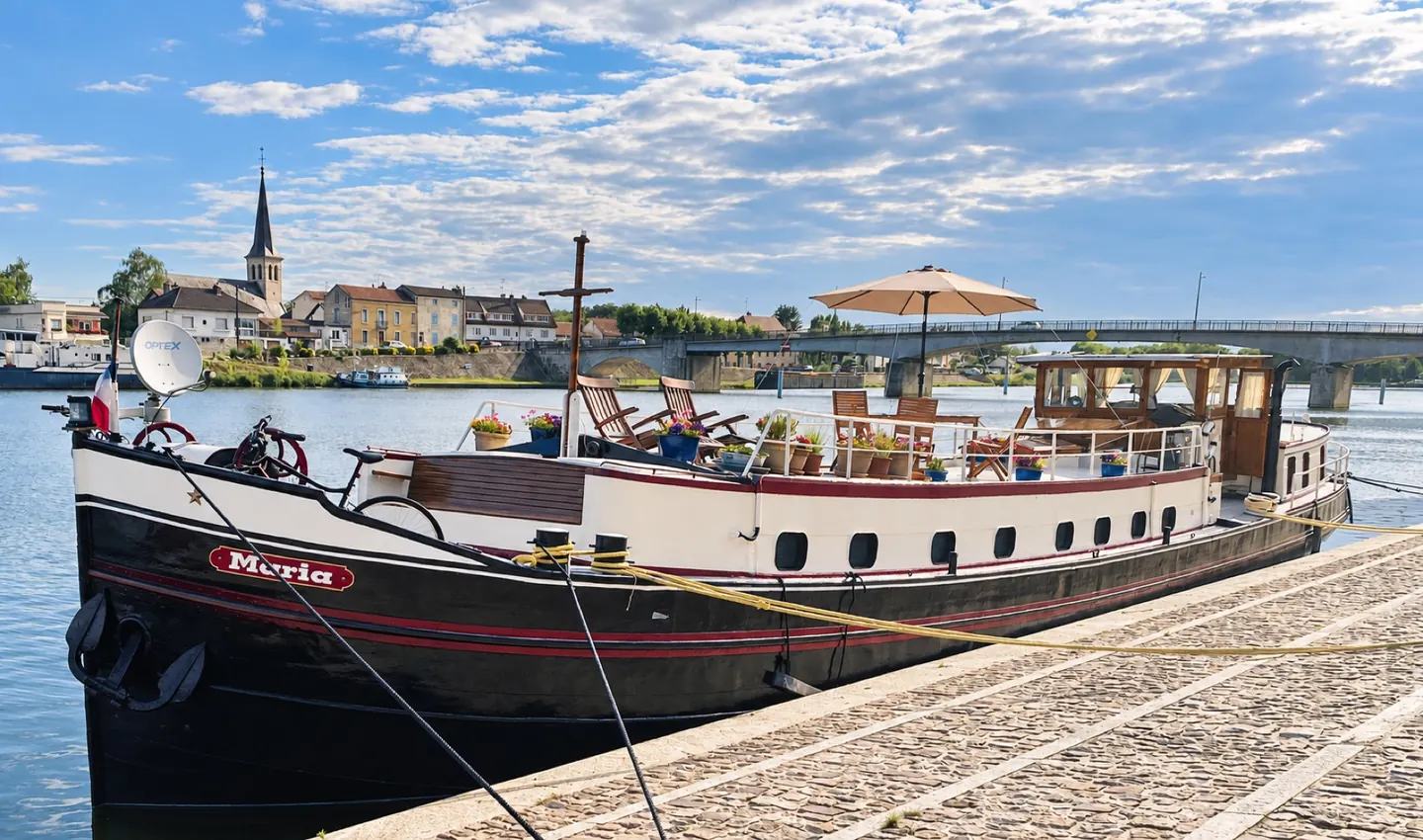
A Dutch Luxe Motor is not a luxury yacht. It is a type of motor cargo barge developed for the Dutch inland waterways, combining a purposeful hull, its own engine and accommodation for the skipper and family. Maria is one surviving example.
Not a luxury yacht
A Luxe Motor was a working cargo vessel. The type appeared on Dutch waterways during the 1920s, when engines were changing inland navigation. Older barges had often been designed for sail or towage and fitted with an engine later. A Luxe Motor was conceived as a motor vessel from the beginning, although some early examples retained a small auxiliary sailing rig.
The familiar shape usually combined a fairly upright bow, a swept stern, a covered wheelhouse and family accommodation in the aft deckhouse, or roef. The engine made the boat independent of a tow and the accommodation made life rather better for the skipper and family who worked and lived aboard.
That improved accommodation is often said to explain the word luxe. Dutch historical research suggests the origin is not quite that tidy: the name may have been borrowed from the smart motor pleasure boats of the period. Even the name of the type has a small unanswered question attached to it.
Built at Coops in Hoogezand
Maria’s surviving register records her name, her construction in 1931 and the Coops yard at Hoogezand in the northern Netherlands. She was built with riveted hull plates. Look closely at her bow today and the lines of rivet heads are still clearly visible. They are not decoration; they are part of the method by which her hull was assembled before welded construction became standard.
After more than ninety years Maria is not untouched, nor should she be. Later repairs and welded overplating sit alongside the original riveted structure. A working vessel survives because each generation maintains, repairs and adapts her.
Her rivets are not decoration. They are how Maria was put together.
How to recognise a Luxe Motor
There was no single mould from which every Luxe Motor emerged, but the family resemblance is strong. Look for a substantial bow, a hull shaped for carrying cargo, a rounded or swept stern and a wheelhouse with the skipper’s accommodation grouped towards the back of the vessel.
The long central hold was the earning space. The engine and living quarters occupied the stern, leaving as much volume as possible for cargo. That division still explains Maria’s layout: her present saloon and cabins occupy space that once had an entirely different purpose, while the wheelhouse remains above the machinery at the aft end.
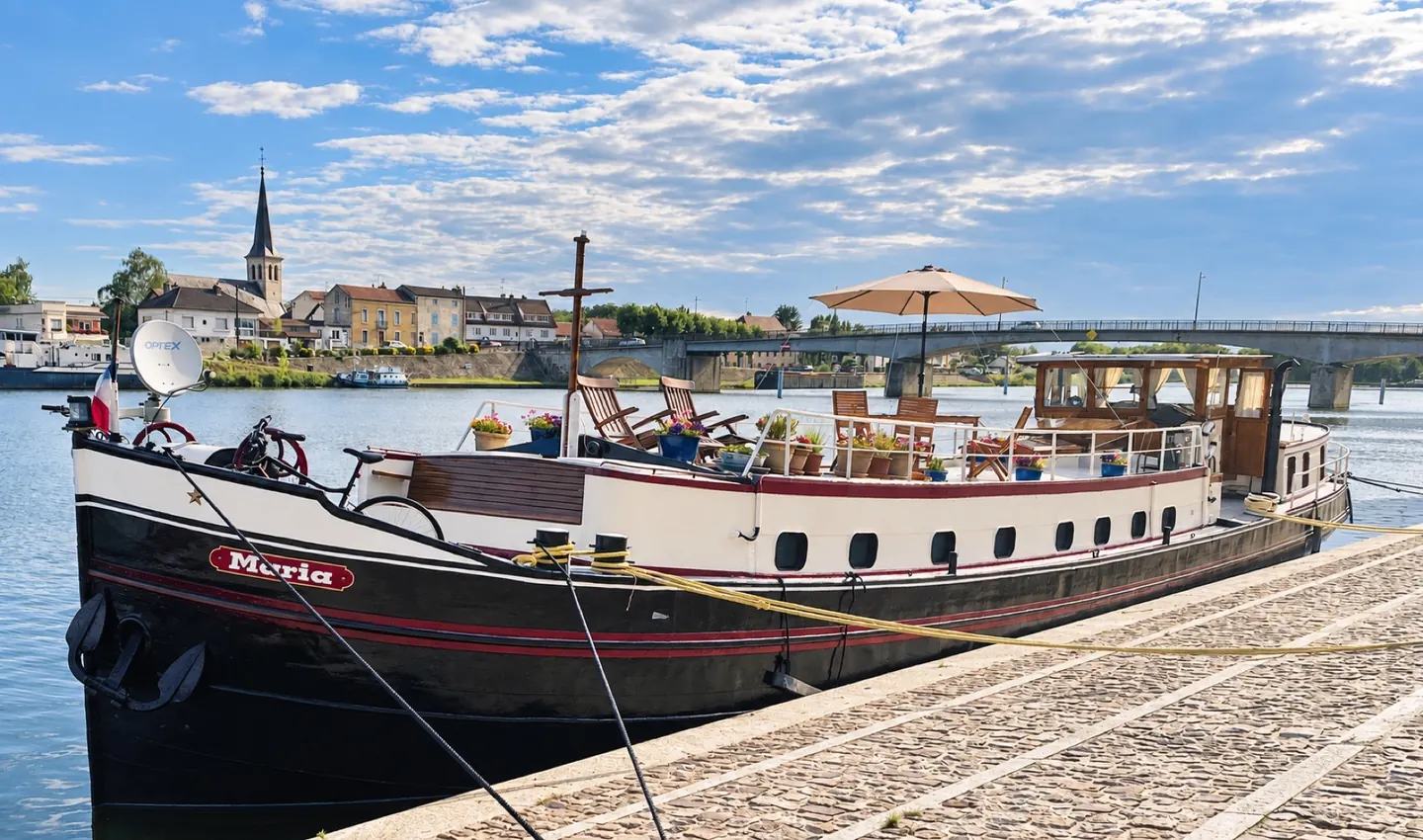
Maria is an example, not a museum reconstruction
Maria measures 25 metres today, close to her original length. During her commercial life she was lengthened to approximately 31 metres, increasing the cargo she could carry, and was shortened again during the major 1991–92 reconstruction.
Her present Mercedes-Benz engine, hydraulic steering, domestic spaces and later steelwork belong to different periods. None of that makes her less authentic. Historic working boats survive by being useful, and usefulness requires alteration. Maria remains the original vessel: recognisably a Luxe Motor, repeatedly adapted and still travelling.
The ownership chronology, the meadow where Maria was found, her original Kromhout engine and the complete reconstruction archive belong in Maria’s full History. Her current dimensions, machinery and systems are recorded separately in Maria’s Technical details.