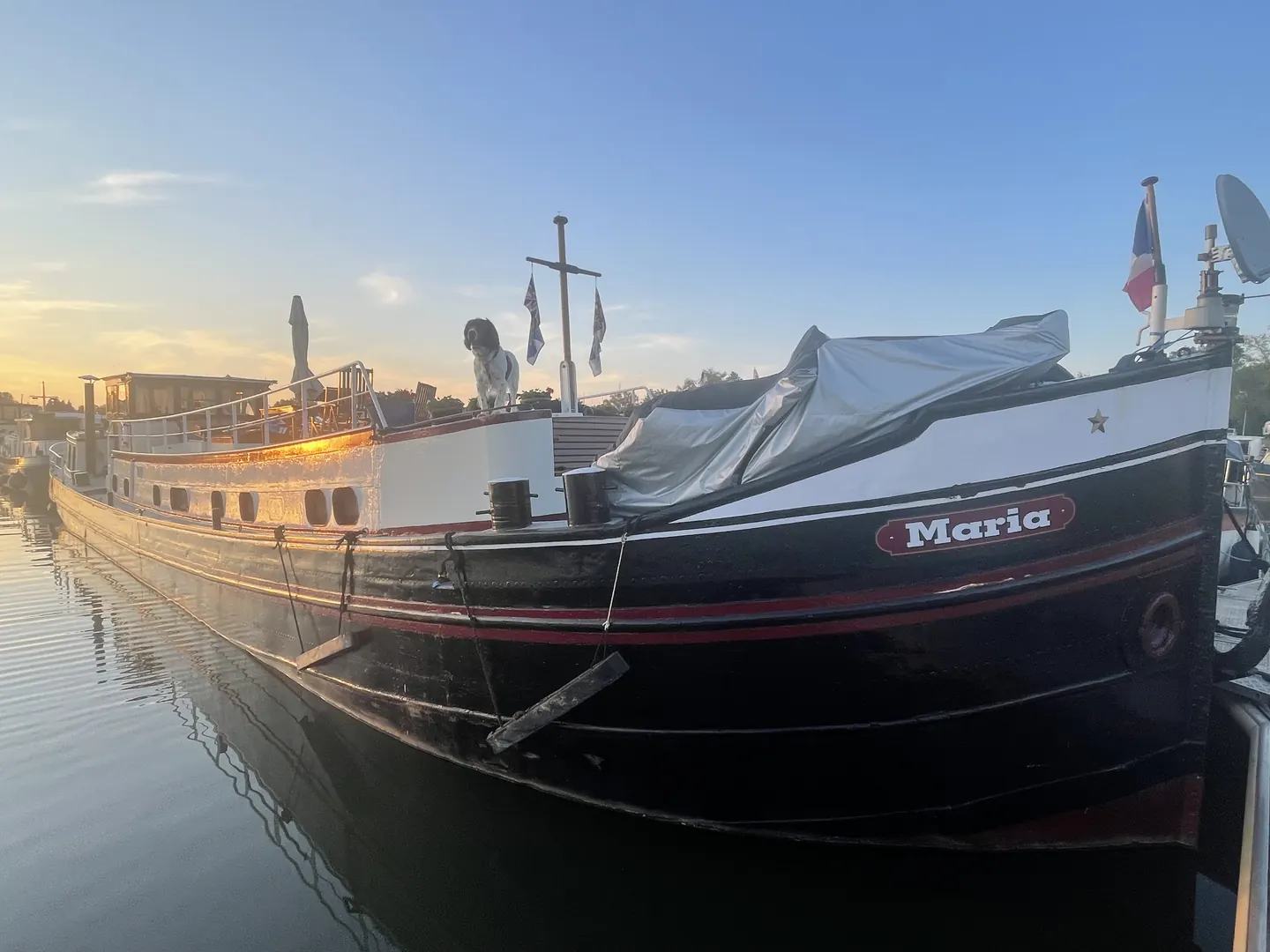
We are Mike and Karen—Kaz to friends—and since 2019 Maria has carried us, our family, Oscar and a growing collection of stories along Europe’s waterways. Living aboard her is comfortable, occasionally complicated and never quite ordinary.
A home that happens to move
There is a simple pleasure in waking somewhere new without having packed a suitcase. One morning the view from the wheelhouse may be open countryside; a few days later Maria is part of Paris, Lyon or Strasbourg. We arrive slowly enough to notice the change.
Inside, she feels like a proper home. There is a generous saloon, a kitchen in which we actually cook, comfortable cabins and the practical storage that long periods aboard demand. We do not arrive carrying our holiday with us; our home is already there.
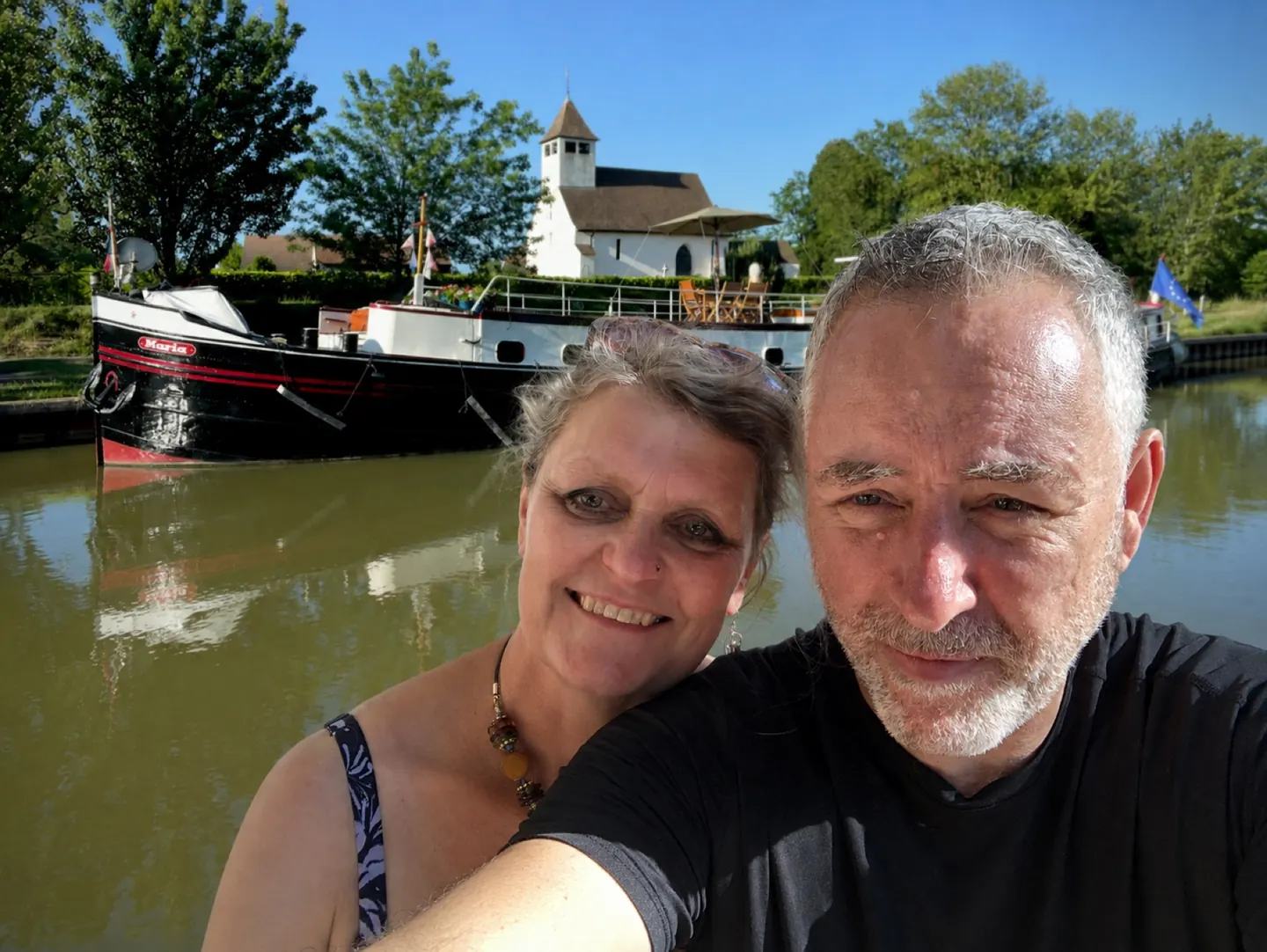
Space is generous, but never accidental
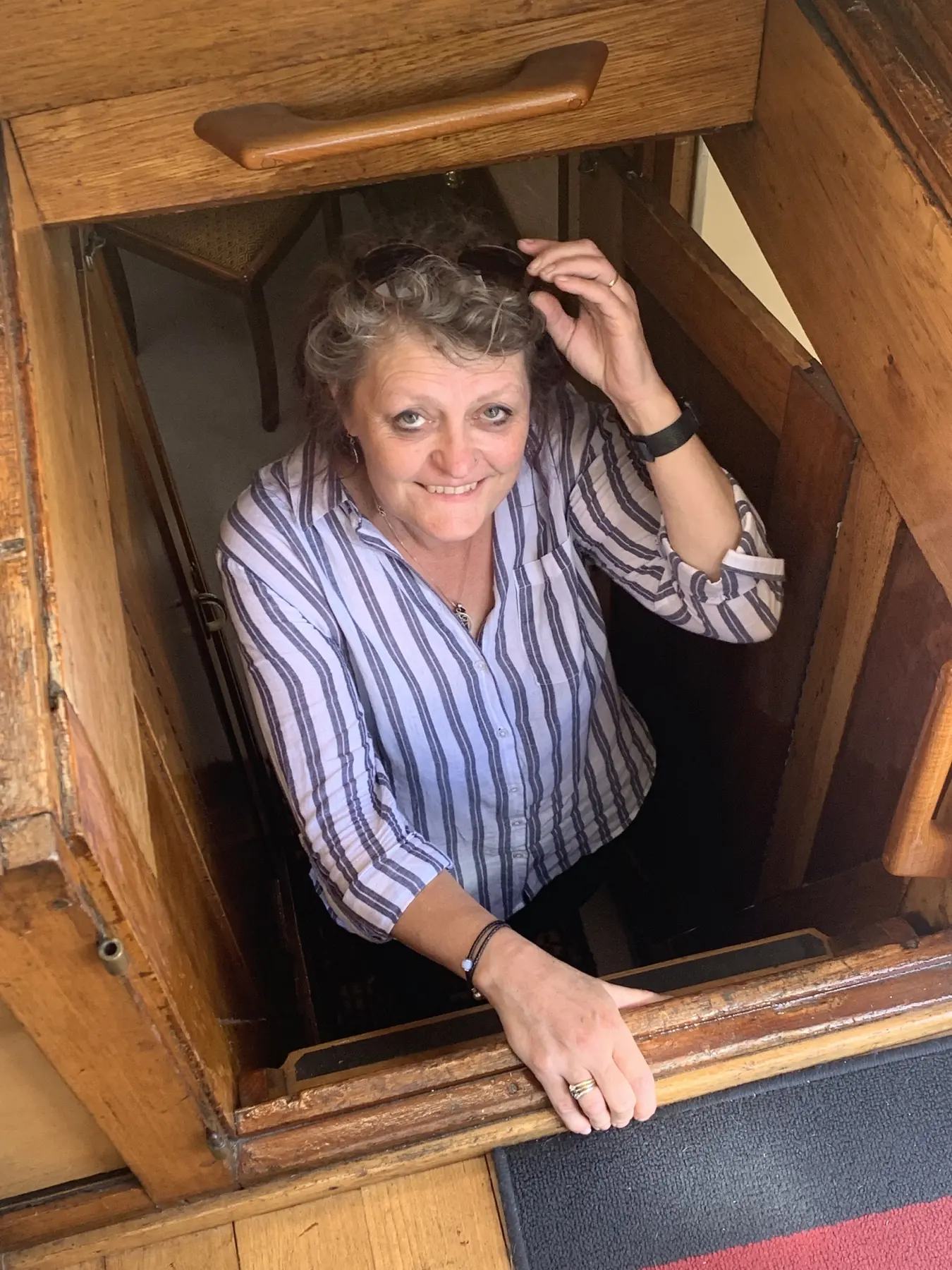
Twenty-five metres sounds enormous until it has to contain bedrooms, bathrooms, a kitchen, water tanks, heating, machinery, tools, ropes and everything needed for weeks aboard. Maria gives us far more room than most boats, but every cupboard and access hatch still has a purpose.
Three en-suite cabins mean family and friends can stay without everybody living on top of one another. The saloon is large enough to feel settled and the deck becomes another room whenever the weather allows. The main Life Aboard page is the visual tour; the reality behind those photographs is that a comfortable barge still rewards order.
Moving days and staying-put days
A moving day begins differently from an ordinary day. Ropes are made ready, the wheelhouse becomes a workplace and locks set the pace. Once Maria is safely tied up, the same deck returns to being somewhere for lunch, a book or a glass of wine.
Staying put is not a failure to travel. It is how we get to know a place. Shopping at the local market, finding a good restaurant, walking Oscar and talking to people beside the quay are as much a part of life aboard as the miles in the log.
The scenery changes, but home comes with us.
Self-sufficiency has limits
Maria can make remote places feel remarkably civilised. We have water, electricity, heating, cooking and showers, with solar panels and a PERMO water-filtration and treatment system helping us remain independent for longer.
That freedom still depends on a quiet routine: filling and checking the tanks, managing waste, watching the batteries and power use, and knowing where the next practical stop may be. None of it is dramatic when it is done in time. Maria’s technical page shows the machinery and services that make the domestic side possible.
Maintenance lives with us
A large old boat has a great deal of paintwork, machinery and domestic equipment, and something will invariably want attention. Some jobs are planned for a yard; others announce themselves during breakfast. Looking after Maria is not an interruption to owning her—it is part of the arrangement.
Her age is also part of the pleasure. The rivets, steelwork and proportions belong to a working vessel built in 1931, while the rooms and systems inside allow us to live comfortably now. We are custodians as well as owners, although that lofty thought is sometimes less obvious when a pump stops working.
Oscar and the changing front garden
Oscar quickly understands where home ends and the latest mooring begins. His walks give us a reason to explore beyond the quay, and his preferred place on deck provides a reliable measure of the weather.
The view outside may be a city basin, a village, a wooded bank or a lock wall. That changing front garden is one of the things we value most. We can stay long enough to feel settled and then, when it is time, take the whole house somewhere else.
Is life aboard always idyllic?
No. It can be hot, wet, muddy, noisy and frustrating. Plans change. Waterways close. Parts fail. Manoeuvring a boat of Maria’s size and history concentrates the mind, and living together in a moving home is still living together.
Yet the awkward days belong to the story as much as the perfect ones. Somewhere along the journey Maria stopped feeling like a large boat we were learning to manage and started becoming our way of seeing France.